How much time will a player want to spend talking to a character when playing a module? That's just one question I consider when writing a conversation for one of my characters. This question, however, soon opens into a branch of others:-
1) Should a conversation be succinct or verbose?
2) Should there be many options to choose from or only a few?
3) Is there an option to avoid conversation altogether?
4) Is a conversation even the correct response in a given situation?
Keep To The Point
My wife likes playing adventure games, and I like to join in now and then. Recently, we were playing "The Longest Journey" (which came highly recommended within the adventuring community, scoring around 90%), and I found myself disappointed with the rather wordy and often unnecessary crass comments made by the characters in this game. I suppose some people may consider the responses as "background filling" and "gritty reality", but both my wife and I found them somewhat boring and tedious to work through just to get to the piece of information we needed.
Don't misunderstand me, I enjoy some background conversations, especially if they help me to understand something about the gameplay. However, I believe there is a definite distinction between being verbose (I would even say "babbling on") as I found in The Longest Journey, and giving the player a useful background in as fewer words as possible.
In Better The Demon, background information in conversations is kept to a minimum to avoid "data overload" for the player just trying to get around the environment. However, when it has been "neccessary", I have tried to allow a player to choose options that appeal to them or allow an early exit if possible. Furthermore, I include books (using my Readable Books format) that also cover different sections of background that players can read or ignore as they choose.
Avoid Too Many Choices
Another personal misgiving that I have encountered in many games, is when a conversation starts to branch out in more directions than I can easily remember ... or really need. I know the idea is that the game is offering as much "choice" as the player wants, but there is a danger in this design. For example, many conversations are designed to help move the plot forward and set "flags" along the way to ensure the game moves along as it should. However, if a conversation is both tedious to read and has many branches and options to go down, a critical plot changing flag may be lost somewhere deep within one of the conversation's many branches and be easily missed.
In my opinion, forcing a player to take a certain conversation option to locate a critical piece of information to set a flag and move the game forward can be a real game stopper. Therefore, each option that a player is given should "go somewhere" and not require the player to have to repeat the conversation just to find the option they needed. Of course, there is a proviso here, in that a conversation line that is obviously different from another is not to be considered a "dead option". The guideline here, is to keep conversations focussed on the topic at hand and directly related to what the player is doing or really wants to know. As an example, The Longest Journey also fails in this area, as it often has options where a player can ask characters about each other, and even about themselves! I don't want to read about this sort of thing. This information should be obvious just from my interaction with them. The problem is, as a player, we are forced to follow these lines of conversation because we do not know if the game hides an important piece of information buried deeply down the many layers of conversation.
In Better The Demon, choices are kept to a minimum and cater for skills and/or different plot paths only. In other words, all choices will be relevant to what the PC needs to know, all be it approached by different paths, as opposed to different paths leading to verbose uninteresting babblings ... unless this is a personality trait of the NPC, which the player is trying to "defeat". The point being, the conversation choices will be obvious as to their effectiveness and importance to the situation, and the player will not be overloaded with choices that lead nowhere, or simply try to impart spurious information.
I Don't Want To Talk!
Sometimes, a player may feel like they know what they need to do, and talking is not even an option they want to entertain. In my opionion, if possible, a game should be able to adjust to a player's preferences. In many situations, "talking" should be the default course of interaction between player and non-player character (NPC), to allow the player to flesh out their adventure by learning more about the world in which they are adventuring. However, if during the course of their adventure they have already drawn a conclusion about an NPC and believe a fight to the death is the answer, then hopefully, a system can be included to allow the player to avoid a conversation, be it as direct combat or an option in the conversation simply to say something along the lines of "Attack Mr X". And what about players playing evil PCs, where "killing" and "taking" what they need from an NPC is easier than "talking" and "doing a task" for them?
Now, I am sure any builder worth their salt will recognise that building a module that caters for both good and evil aligned PCs is extremely difficult - especially with respect to such things as conversations and providing the player with the information they need. After all, what happens when a player playing an evil PC kills an NPC before some critical information has been imparted to the player? Regular readers of this blog will know I have touched upon this problem in the past.
In Better The Demon, I have taken as much care as possible to allow as much choice as possible, including the "total avoidance" path wherever possible. This has taken extra time and consideration, and can only be applied to around 90% of conversations. Even then, a player set out to "kill" rather than "talk" will lose out on some XP, simply because they would end up "killing the goose that laid the golden egg". However, for the remaining 10% of conversations where "talking" is required, I have tried to offer a more succinct path where possible.
How Did They Know I was Here?
The last consideration problematic for RPG's in particular, is taking into account actions made by the PC that the builder of the module may not have initially considered, such as a PC being invisible. This is a particularly awkward problem to address, but one that needs consideration if, as a game designer, we wish to ensure logical flow in the game. After all, if a player has taken the time and trouble to become invisible so as to try to sneak past an NPC, what happens if this NPC has been set to "talk" to the PC when they are within range? If the NPC suddenly runs up to the PC and begins a conversation, the logical flow of the game is spoiled.
There is not much to add to this, except to highlight it as a potential issue for all builders and that I have tried to adopt a system to cater for this within my own module, Better The Demon.
The Last Word
The final word on this, however, depends on the sort of game you are trying to build, or, as a player, want to play. However, I do believe that the above guidelines are important for all games, simply because they avoid some of the pitfalls about writing in general. Key aspects such as the following will help to keep the pace of the game flowing:
a) Write about what you know.
b) Use as few words as possible.
c) Show, don't tell.
I have read modules that boast many thousands of words in them as a sign of "depth" and as if a sign of returned hours of "enjoyment" ... which I do hope is the case. I think that as long as the number of words reflects diversion in converstion and viable choices, then the number count can only be a good thing. On the other hand, if it is meant to represent simple length of conversations, then, like The Longest Journey adventure game I describe above, I would be extremely disappointed and may find my eyes glazing over to the point where I would miss a clue at best ... or stop playing altogether.
Have Your Say!
Well, I've waffled on long enough about conversations in this post, and would now like to hear about your own experiences, whether as a player: Tell me of your worst or best experiences with game conversations. Or as a builder: How do you plan your own conversations?
Also, please take your time to answer the poll question this time around: Very simply: (Assuming you will be playing my module) How Will You Be Playing? With respect to single-player (SP), multi-player (MP) or both? And also with respect to a good aligned or an evil aligned PC?
Monday, 18 July 2011

Tuesday, 5 July 2011
Invisibility & Stealth
A quick update again, just to say that I continue to work on conversations, but have also been trying to consider what options to offer when a PC might be under the influence of invisibility and trying to be stealthy. E.g. What if a player, playing a lone PC, goes invisible with a potion or spell and then tries to do certain actions?
I have looked at the various options where this may have an impact, including trying to speak with somebody, trying to sneak past somewhere, or even just moving around ... and came to the conclusion that many situations required a player option as to whether they wish to stay invisible or come out of their invisible state to do the action they are trying to perform.
To this end, I designed a very simple GUI offering the player a choice in these situations where they may be compromising their invisibility. In such cases, they are given the choice to come out of invisibility and continue with their actions (which may be fine if it is simply to talk to someone) or to remain invisible and forfeit the action they were trying to do. Below is a simple example of an invisible PC trying to speak to a shop keeper (Other situations are worded differently.):

Invisibility and being stealthy to sneak past someone add another level of complexity, and I have tried to be fair in my decisions where such actions may compromise a PC's visibility state, leaving it up to the player if they wish to stay invisible or not. Just the sort of thing I am dealing with as I continue to code the game.
Meanwhile, on the home front, Honey, our upstairs rabbit, has continued to improve in health since I last posted, so that is one less concern affecting my concentration to worry about. However, I have been distracted by having to deal with other issues that are taking some of my time, which may end up delaying posting in the coming weeks. No fear though, I will be trying to do more as soon as I am able to and will let you know in a blog as soon as I do.
I have looked at the various options where this may have an impact, including trying to speak with somebody, trying to sneak past somewhere, or even just moving around ... and came to the conclusion that many situations required a player option as to whether they wish to stay invisible or come out of their invisible state to do the action they are trying to perform.
To this end, I designed a very simple GUI offering the player a choice in these situations where they may be compromising their invisibility. In such cases, they are given the choice to come out of invisibility and continue with their actions (which may be fine if it is simply to talk to someone) or to remain invisible and forfeit the action they were trying to do. Below is a simple example of an invisible PC trying to speak to a shop keeper (Other situations are worded differently.):

Invisibility and being stealthy to sneak past someone add another level of complexity, and I have tried to be fair in my decisions where such actions may compromise a PC's visibility state, leaving it up to the player if they wish to stay invisible or not. Just the sort of thing I am dealing with as I continue to code the game.
Meanwhile, on the home front, Honey, our upstairs rabbit, has continued to improve in health since I last posted, so that is one less concern affecting my concentration to worry about. However, I have been distracted by having to deal with other issues that are taking some of my time, which may end up delaying posting in the coming weeks. No fear though, I will be trying to do more as soon as I am able to and will let you know in a blog as soon as I do.
Friday, 24 June 2011
Dealing With Complexities
This is going to be a very brief post this week for two reasons:

1) Our upstairs rabbit, Honey, has not been very well again. Poor thing suffers a lot with teeth problems and now she appears to have nasal issues on top - caused either by another hidden tooth problem or some sort of sinus issue. I have had to spend some time looking after her (collecting dandelion leaves every so often - the only thing she feels comfortable eating at the moment) and sitting alongside her, trying to make sure she stays warm and content. She had a stressful last week being taken to the vets. It stressed me too (for her sake). She is still not 100%, but I am hoping she is making a gradual recovery. Time will tell.
2) I am writing conversations for the characters and the whole process is going a lot slower than I had hoped it would do; probably partly due to the above, but also due to the fact that the current conversations are quite involved with journal entries and variable settings. This is probably straight forward for most people, but I have to pace myself when dealing with this sort of thing and so only manage a very little towards it in a day. Hopefully, the end result will support multiple paths and approaches to the conversations and quests in question. Yet, once these ones are done (required as I started to design the module this way), I intend to curb my ambitions in future and greatly simplify them if possible. (See next.)
Looking Forward
There are still quite a few conversations to write, which will gradually get easier as I move away from earlier designed ideas and move toward a more "linear" style of writing. Do I here a "gasp" from you when I mention "linear"? Well, let me just clarify what I mean by "linear": The gameplay should remain "non-linear" (as good as any "non-linear" game can be), but quests will not be so intermixed as I have them at the moment. The problem at the moment, is that many of the quests revolve around a few specific NPCs (as normal), but that every NPC also potentially has an input to another NPCs quest (not normal gameplay design). Add to this items that can be found that open more conversation nodes and .... you get the picture? (It's difficult to describe exactly what I mean without giving too much away.) Future quests and conversations will be reserved to a "one on one" design. That is what I mean I will be changing to be more "linear".
Once I have these conversations out of the way, I can look at finishing the last few areas that I decided to add for greater gameplay of module 1, and then begin tying the whole thing together and look at producing a beta for testing. It's probably still a few months away yet, and really depends on how well I can deal with the conversations and design those areas. One thing I can say, however, is that I am beginning to see a light at the end of the tunnel (for module 1 at least) .... Hoorah!

1) Our upstairs rabbit, Honey, has not been very well again. Poor thing suffers a lot with teeth problems and now she appears to have nasal issues on top - caused either by another hidden tooth problem or some sort of sinus issue. I have had to spend some time looking after her (collecting dandelion leaves every so often - the only thing she feels comfortable eating at the moment) and sitting alongside her, trying to make sure she stays warm and content. She had a stressful last week being taken to the vets. It stressed me too (for her sake). She is still not 100%, but I am hoping she is making a gradual recovery. Time will tell.
2) I am writing conversations for the characters and the whole process is going a lot slower than I had hoped it would do; probably partly due to the above, but also due to the fact that the current conversations are quite involved with journal entries and variable settings. This is probably straight forward for most people, but I have to pace myself when dealing with this sort of thing and so only manage a very little towards it in a day. Hopefully, the end result will support multiple paths and approaches to the conversations and quests in question. Yet, once these ones are done (required as I started to design the module this way), I intend to curb my ambitions in future and greatly simplify them if possible. (See next.)
Looking Forward
There are still quite a few conversations to write, which will gradually get easier as I move away from earlier designed ideas and move toward a more "linear" style of writing. Do I here a "gasp" from you when I mention "linear"? Well, let me just clarify what I mean by "linear": The gameplay should remain "non-linear" (as good as any "non-linear" game can be), but quests will not be so intermixed as I have them at the moment. The problem at the moment, is that many of the quests revolve around a few specific NPCs (as normal), but that every NPC also potentially has an input to another NPCs quest (not normal gameplay design). Add to this items that can be found that open more conversation nodes and .... you get the picture? (It's difficult to describe exactly what I mean without giving too much away.) Future quests and conversations will be reserved to a "one on one" design. That is what I mean I will be changing to be more "linear".
Once I have these conversations out of the way, I can look at finishing the last few areas that I decided to add for greater gameplay of module 1, and then begin tying the whole thing together and look at producing a beta for testing. It's probably still a few months away yet, and really depends on how well I can deal with the conversations and design those areas. One thing I can say, however, is that I am beginning to see a light at the end of the tunnel (for module 1 at least) .... Hoorah!
Thursday, 9 June 2011
Problems, Problems & Puzzles
It's been over a fortnight since I last blogged, but in that time I have been trying to carry on gradually chipping away at the project. There have been some distractions, including birthday's, minor operations and small hardware glitches, but between all that I have managed to do a little in the toolset.
Scripting (Animations)
On the scripting front, I have been trying to achieve a "simple" animation: make an NPC sleep and wake up when disturbed in some way. Since using NWN2 (as opposed to NWN1), I have found scripting animations more difficult. In particular, the latest animation I was attempting to create would not stop its loop after being disturbed, so an NPC would "wake up and get up", only to fall back to the floor asleep again. Thankfully, Pain (who I have mentioned in blogs before) was able to give me the answer of passing the "%" sign as an animation, which stops any current animation that may be playing. A useful tip I now share with you.
Toolset (Texture Bug)
Another incident that caused me to slow down on the creative front was the need to update my VGA drivers. After doing so, I noticed that an in-game texture (on one square only) was not looking like it did in the toolset. After some experimentation, I was able to track the problem down to disabling the "Wait For Vertical Sync" option in the graphic settings. Removing the cross from the box (which means it does not wait) allowed the texture to display as it should in the game as well as the toolset. UPDATE: DISABLE Normal Mapped Terrain will resolve this issue with more consistency. The previous method often required the game to still be restarted,whereas the latter method does not. The only problem is that the textures do not look as good using the latter method.
Custom Content (Puzzles)
The material I have managed to add in the last couple of weeks includes a new image relating to a puzzle in the game. I won't go into much detail so as not to spoil it, but it involved creating a new image that once found in the game is a clue to solving one of the main puzzles of the module. There are a few more parts to this puzzle that I still need to do, but I do have the entire puzzle outlined in my paper manual already. I am quite excited about its inclusion and look forward to seeing players reactions and responses when played.
On another front, I am continuing to write conversations for NPCs and am now finding myself having to be extra careful in doing so, as my "open ended" design has me having to consider a number of approaches the player may be coming from. As I mention in a previous post somewhere, I intend to reduce these types of scenarios to help reduce the amount of extra writing these type of open-ended approaches require.
Slowly coming along ....
Scripting (Animations)
On the scripting front, I have been trying to achieve a "simple" animation: make an NPC sleep and wake up when disturbed in some way. Since using NWN2 (as opposed to NWN1), I have found scripting animations more difficult. In particular, the latest animation I was attempting to create would not stop its loop after being disturbed, so an NPC would "wake up and get up", only to fall back to the floor asleep again. Thankfully, Pain (who I have mentioned in blogs before) was able to give me the answer of passing the "%" sign as an animation, which stops any current animation that may be playing. A useful tip I now share with you.
Toolset (Texture Bug)
Another incident that caused me to slow down on the creative front was the need to update my VGA drivers. After doing so, I noticed that an in-game texture (on one square only) was not looking like it did in the toolset. After some experimentation, I was able to track the problem down to disabling the "Wait For Vertical Sync" option in the graphic settings. Removing the cross from the box (which means it does not wait) allowed the texture to display as it should in the game as well as the toolset. UPDATE: DISABLE Normal Mapped Terrain will resolve this issue with more consistency. The previous method often required the game to still be restarted,whereas the latter method does not. The only problem is that the textures do not look as good using the latter method.
Custom Content (Puzzles)
The material I have managed to add in the last couple of weeks includes a new image relating to a puzzle in the game. I won't go into much detail so as not to spoil it, but it involved creating a new image that once found in the game is a clue to solving one of the main puzzles of the module. There are a few more parts to this puzzle that I still need to do, but I do have the entire puzzle outlined in my paper manual already. I am quite excited about its inclusion and look forward to seeing players reactions and responses when played.
On another front, I am continuing to write conversations for NPCs and am now finding myself having to be extra careful in doing so, as my "open ended" design has me having to consider a number of approaches the player may be coming from. As I mention in a previous post somewhere, I intend to reduce these types of scenarios to help reduce the amount of extra writing these type of open-ended approaches require.
Slowly coming along ....
Tuesday, 24 May 2011
Fixing The Little Things
Thanks for all the feedback regarding my new area last week. I have taken on board the comments and tried to make improvements where I can. And thanks to everybody who helped me to understand some of the basics behind area design to allow me to even try to build a better area in the first place. I did not spend much more time on this, but decided to look at ensuring transitions remain stable, especially between module changeovers and from areas where having any dead PCs may be an issue.
Respawning The Dead
Unless you are considering programming for multi-player (MP), you may not have considered some of the potential pitfalls that come with the death of PCs - apart from the obvious for the player. If you have altered the way your death system works as well, like I have, then there are even more considerations you need to take into account. The bottom line, I believe I have ironed out all the potential "death" circumstances since I last posted and have employed a system that offers the player a GUI presenting an option to be respawned at the cost of an XP penalty, or to consider a different action, normally to turn around and head back from where they came from. This will normally only be an issue where a player is trying to return to a different module within the campaign and when they carry the corpses of companions or fellow players. Because of the way my system works, trying to do so would lose a lot of vital equipment. There is a similar issue when a player tries to leave an overland map encounter area, which I have dealt with in a similar manner.
Fixing Little Things
1) Visual Effects On Store Items: I recently found out that if you have an item that has a visual effect on it and it is added to a store as a "limitless" item, that when bought, the visual effect does not work. I made a workaround for this problem by replacing the bought item with an identical one upon acquisition.
2) Monster Items Reversion: Another small issue I found was that if you have copied an item to your campaign and kept the ID information the same as the original, then any such item added to a creature at build time will revert back to the original. E.g. If you copy an item to your campaign folder and alter the description to avoid any mention to Faerun and then add the campaign item to a creature, it will instantly revert back to the Faerun descriptive one. NB: Having campaign items with the same name, tag and resref is not normally a problem with respect to any other aspect of the campaign (that I have tested to date anyway). Anyway, I also worked another small piece of code to replace these "incorrect items" with the correct one upon the creature being spawned.
I mention both of these small issues, as I imagine they could be something others may have a problem with and not yet be aware of it. If anybody wants the code that I used to resolve the issues, let me know.
As Big As The Moon
This is just an excuse to post a picture I took of the moon a while ago. However, it is true that my world Althéa works out to be about the size of the moon. Anyway, here is the picture, and you can find a few more here.

Moving Onwards
Fixing the problem with the transitions between modules when the player has a dead PC in their midst was an area of coding I was not going to do for a while yet, as I obviously do not need to worry about it for only one module. However, because it impinged on another area I was working with, it had to take priority. The good news is now that I have that code sorted, I can get on with what I was trying to do in the first place. More on that later in another blog perhaps. What I can say now, however, is that Hoegbo has once again kindly offered his help with some of my work and I will be taking him up on his offer soon, which means area production should benefit greatly.
Respawning The Dead
Unless you are considering programming for multi-player (MP), you may not have considered some of the potential pitfalls that come with the death of PCs - apart from the obvious for the player. If you have altered the way your death system works as well, like I have, then there are even more considerations you need to take into account. The bottom line, I believe I have ironed out all the potential "death" circumstances since I last posted and have employed a system that offers the player a GUI presenting an option to be respawned at the cost of an XP penalty, or to consider a different action, normally to turn around and head back from where they came from. This will normally only be an issue where a player is trying to return to a different module within the campaign and when they carry the corpses of companions or fellow players. Because of the way my system works, trying to do so would lose a lot of vital equipment. There is a similar issue when a player tries to leave an overland map encounter area, which I have dealt with in a similar manner.
Fixing Little Things
1) Visual Effects On Store Items: I recently found out that if you have an item that has a visual effect on it and it is added to a store as a "limitless" item, that when bought, the visual effect does not work. I made a workaround for this problem by replacing the bought item with an identical one upon acquisition.
2) Monster Items Reversion: Another small issue I found was that if you have copied an item to your campaign and kept the ID information the same as the original, then any such item added to a creature at build time will revert back to the original. E.g. If you copy an item to your campaign folder and alter the description to avoid any mention to Faerun and then add the campaign item to a creature, it will instantly revert back to the Faerun descriptive one. NB: Having campaign items with the same name, tag and resref is not normally a problem with respect to any other aspect of the campaign (that I have tested to date anyway). Anyway, I also worked another small piece of code to replace these "incorrect items" with the correct one upon the creature being spawned.
I mention both of these small issues, as I imagine they could be something others may have a problem with and not yet be aware of it. If anybody wants the code that I used to resolve the issues, let me know.
As Big As The Moon
This is just an excuse to post a picture I took of the moon a while ago. However, it is true that my world Althéa works out to be about the size of the moon. Anyway, here is the picture, and you can find a few more here.

Moving Onwards
Fixing the problem with the transitions between modules when the player has a dead PC in their midst was an area of coding I was not going to do for a while yet, as I obviously do not need to worry about it for only one module. However, because it impinged on another area I was working with, it had to take priority. The good news is now that I have that code sorted, I can get on with what I was trying to do in the first place. More on that later in another blog perhaps. What I can say now, however, is that Hoegbo has once again kindly offered his help with some of my work and I will be taking him up on his offer soon, which means area production should benefit greatly.
Thursday, 12 May 2011
Scale (Area Screenshots)
I hope you enjoyed my articles on "The Changing Face of AD&D". It gave me a chance to relax and write about something that I enjoy talking about, and I hope readers felt the same. If you still have a comment to make regarding any aspects of the game, please leave one.
This week is going to be a short post by comparison, made up mostly of screenshots of an outside area I have tried making. As regular readers will know, area design is not one of my strong points, but having looked at other peoples work, I thought I would try again. The results were better than before, and so I decided I would be using them in the module. Check out the shots below and let me know what you think. One thing I learned from looking at other peoples work is that scale, when well used, can make an area feel bigger and fuller than it really is. (I don't normally like to give area screenshots as a preview, but I would like feedback in this case as well.)
Module One Increasing
One last note before the screenshots, and also on the subject of scale, I have decided to increase the number of areas of the first module. (The screenshots below are one of the areas.) The reason is due to the decision I made to release the first of the modules before the other two in the campaign. I felt that the first module lacked any real depth without the other two modules and would leave players a little disappointed. Thankfully, however, the new additions do not require much work, compared to the amount of game play they give in return. As much of the core code is already in place, I am simply expanding on the first module with a couple of slight detours.
Anyway, here are the screenshots of one of the areas (Enclave valley) that is nearly finished now, so please do leave a comment.
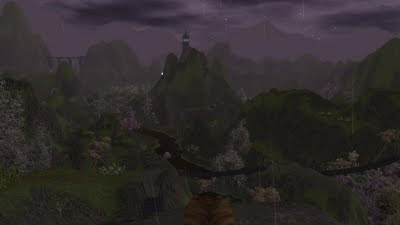
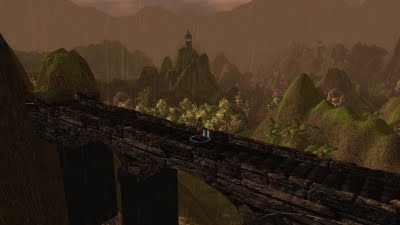
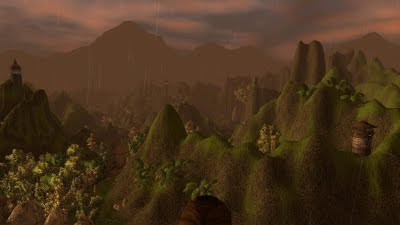
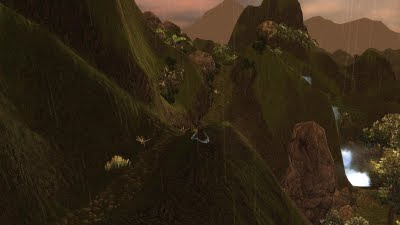
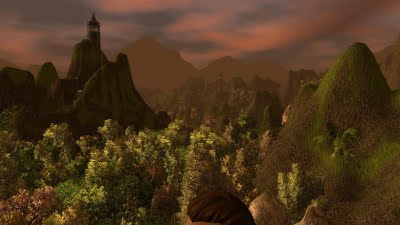
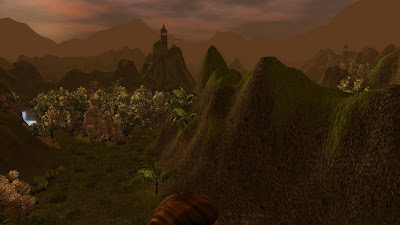
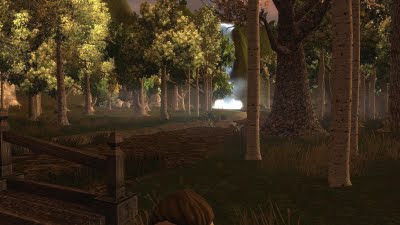
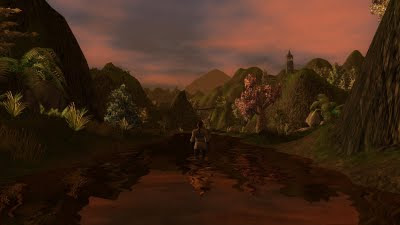
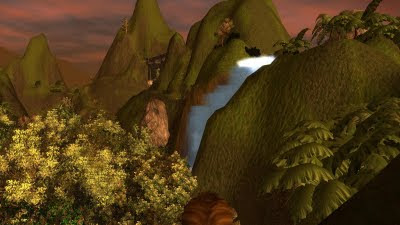
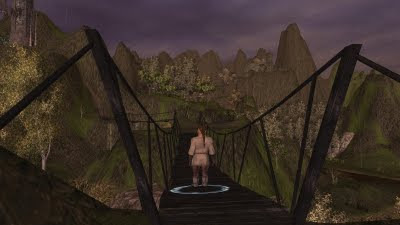
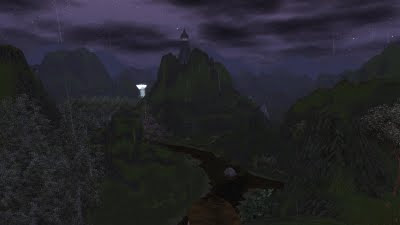
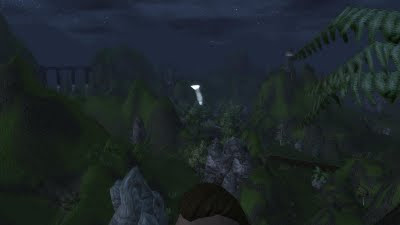
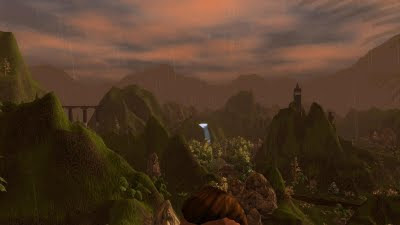
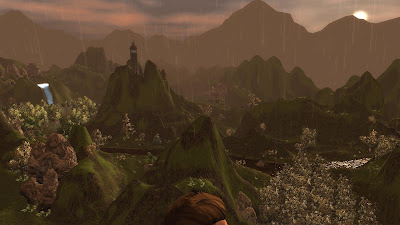
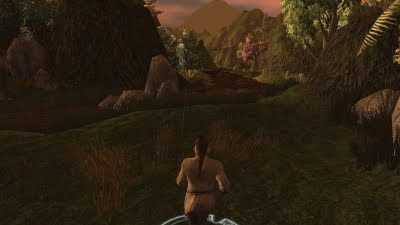
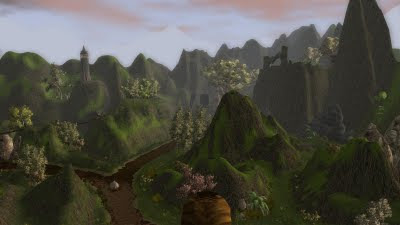
This week is going to be a short post by comparison, made up mostly of screenshots of an outside area I have tried making. As regular readers will know, area design is not one of my strong points, but having looked at other peoples work, I thought I would try again. The results were better than before, and so I decided I would be using them in the module. Check out the shots below and let me know what you think. One thing I learned from looking at other peoples work is that scale, when well used, can make an area feel bigger and fuller than it really is. (I don't normally like to give area screenshots as a preview, but I would like feedback in this case as well.)
Module One Increasing
One last note before the screenshots, and also on the subject of scale, I have decided to increase the number of areas of the first module. (The screenshots below are one of the areas.) The reason is due to the decision I made to release the first of the modules before the other two in the campaign. I felt that the first module lacked any real depth without the other two modules and would leave players a little disappointed. Thankfully, however, the new additions do not require much work, compared to the amount of game play they give in return. As much of the core code is already in place, I am simply expanding on the first module with a couple of slight detours.
Anyway, here are the screenshots of one of the areas (Enclave valley) that is nearly finished now, so please do leave a comment.


Saturday, 30 April 2011
The Changing Face of AD&D (Part 3)
This is going to be my final blog on the series, so normal module updates will return next week, including some screenshots of an area I designed. Yes, I actually took on board all that people have shown me and been inspired to do a new area of my own. That's for next time though. This week I am talking about the 3rd and 4th edition rules of pen and paper D&D. Note that while I have kept the title as AD&D, the game itself dropped the "A" for advanced and became simply D&D after the basic version of the game was dropped prior to the release of these later editions.
In this week's blog, as well as covering the 3rd and 4th editions, I also touch upon the Neverwinter Nights (NWN) and D&D Online (DDO) versions of the game. After all, NWN is probably the prime reason you are even reading this today thanks to the great community of players that has come into existence since Bioware set up the forums for NWN. So, without more preamble, let me now discuss my recollection of playing with these various versions of the game.
Third Edition

Last week you may recall my disappointment regarding the huge expansion of supplemental material that was to quickly come with the second edition rules. For some, the extra materials may have been a great benefit, in the same way I thought of them when I first started playing D&D. However, by the year 2000, when I bought into the third edition rules, I had reached the point where I wanted to keep things "simple". Nuances and rules to the nth degree I had had my fill, and so I made a decision only to buy the core rule books from this edition onwards, which I did at this time. For the third edition rules my wife did buy the Manual of the Planes in 2001, but this was a useful addition (in the same way I felt about it in its original first edition release) and ended up helping me design the setting for my NWN1 module, Soul Shaker, which takes place on a demi-plane. That was the last book I was to acquire for this edition, although I did download and consider some of the core updates of the 3.5 edition of the rules that became freely available on the Wizards of the Coast website (WotC).

Fourth Edition

Towards the end of the 00's, the fourth edition rule set was released. To be frank, although there was a lot of hype and promise around the fourth edition rules, the main reason I bought a boxed copy of the core rules was simply to "complete" my set of the core rules available to date. Now, having glanced over the fourth edition and witnessed the amount of additional "core rules" that have become available for this edition, I believe I have definitely been left behind as a player. The boxed set is very well laid out and of excellent quality, but, in my opinion, the spirit and heart of D&D has been so changed in their coming that I can never see me using them as a means of playing the game. So much so, that I believe the fourth edition will be the last investment I make in such books. Since this edition, the D&D I knew and enjoyed playing has changed to such a degree that I feel as though the game is targeting a new breed of player. I will let you draw your own conclusions here. As you can probably tell by now, I will not be discussing the fourth edition any further in this blog.
The Pros and Cons (Third Edition)
PROS
1) The D20 System: Finally, the awkward number system surrounding the whole game was changed for a sensible one based around the twenty sided die. Attributes now ran along similar values and were no longer capped; experience tables were made fairer for all classes and armour classes improvements went into positive numbers instead of negative ones. Without doubt, this improvement alone went a long way to making D&D much more of an easier game to play without compromising its integrity. It was the "decimalisation" of D&D!
2) Skills (Also listed as a CON): Non-weapon proficiencies of the second edition had come of age by the third edition in the form of skills. I explained how this was to become a positive move in my blog on the second edition, so I won't say anything more other than in many respects it was a well thought out system covering many aspects of game play that could be easily implemented as required. However, I reserve the right to comment on it as a CON as well. (See CONS.)
3) Clearer Rule Definitions: The third edition of the rules did a lot to clarify many of the more vague rules behind such things as effects and conditions. This can be illustrated if one examines the details of creatures and their abilities of the Monster Manual. As an example, one may have once simply associated the ability to "regenerate" with trolls and vampires. However, once this ability had been described independently of the creature themselves, it was easier to recognise it as something that could be applied as an ability of an object with its own rules and definitions in play. Unfortunately, this kind of clarification can also rob us of some of the initial unique and special appeal the ability/creature had when we first encountered it, but this cannot be avoided if we want to also build worlds that work according to some sort of law or reason. There are so many other "clarifications" that fall under this PRO that I could not do justice here in the space I have, but suffice to say, many of the rules that were once inconsistent or vague from previous editions were given clearer understanding and made sensible in this edition of the rules.
CONS
1) Skills (Also listed as a PRO): The problem with the new system of skills that came with the third edition was not its overall implementation, but the way it allowed some of the more archetypal skills to become available to any class. In particular, I refer to the Open Locks and Disable Device skills. These two skills had now become available to any class who was prepared to invest some time in them, which were once the sole domain of the rogue (thief) class. A clause to the Disable Device skill made magic traps only possible to be disabled by rogues, but apart from that (and declaring these skills would be cross class to all classes but rogues) any class could still acquire these skills. In one quick swoop, the importance of the archetypal rogue/thief class had been crippled. If the "rogue" classification that was introduced in the second edition had been adhered to, we could have maintained the archetypal structure and minimised the classes who had access to the skill. e.g. Only other "rogue" classes (like the bard) may have had access to these skills and perhaps only then as cross class skills, leaving the skills as class skills for the thief only.
2) Restructured Class System (inc Prestige Classes): To be clear, I am NOT opposed to certain classes being brought back into the game, or even new ones added (within reason). However, as a game, I believe a structure or framework is required, which "new" classes should follow or fall into. After all, the problem with removing such a structure (that the second edition offered) is that you open the game up to abuse, be it official or unofficial. By abuse, I also mean as an excuse to "officiate" yet another class or sub-class to accommodate yet another style of play. The problem as I see it, is the third edition rules try to accommodate an archetypal system (like the first edition), but then also try to give reason (excuse) to allow more classes to be made or "tweaked" in various ways to satisfy a player's need to be unique in ways that role-playing once used to do instead. What used to once be a desirable style of play and interaction between player and DM forging a unique PC personality through play has turned into an exercise of character building through an ever growing set of rules to cover the many new nuances of classes coming into being.
3) Restructured Race System (inc Sub Races): Like the change in rules for allowing or building new classes, so the introduction of rules to accommodate new races has been taken further in the third edition rules. What was once a simple matter of choosing a particular race to play has now expanded into a selection of races that were once the sole domain of "monsters". Again, I do not wish to be misunderstood in what I am saying here. For instance, I can imagine a DM wanting/allowing a player to choose to play an unusual race in special circumstances (or even a special campaign), but such races should not become considered the norm to the point of being an expected consideration.
4) Magic System Complicated: Whereas the third edition made some good progress in clarifying many of the rules on conditions and abilities (see PROS), it appears to do the opposite when it comes to spell casting. Three particular rules stand out to me in particular: Counterspells, Meta-magic and Touch Attacks. Just out of curiosity, has anybody reading this blog ever played a counterspell, or played the meta-magic spells much? I know our group never did. And while I appreciate the thinking behind introducing the Touch Attack rule, was it really necessary? After all, can't we just say that armour (natural or otherwise) helps a target of a touch spell resist the effects of the magic by some sort of armour absorption? I know there are arguments about how this would make such spells less effective, but hey, guess what, so be it! The rules makes sense depending upon who we are arguing for, the wizard doing the attack, or the creature trying to protect itself! My argument is, having such a rule does more to complicate matters than actually effect any sort of game balance. Returning to counterspells and meta-magic, all I can add is that these just seem to complicate matters, period. If the third edition had just left spells to scale with level (without capping them), then we could ignore some of the power enhancing meta-magic feats straight way. As for the others, they just serve to complicate the rules anyway, and all of these meta-magic feats start to complicate which spell is available from which level. As for the counterspells rule, I do not even have the heart to counter an argument, it's that tedious!
There were, in my opinion, many great improvements with the third edition rules, from simplified combat and basic number calculations using the D20 system, to working with actions in play, through skills. However, personally, I believe the system took a backward step with respect to organising the archetypal class system. In my opinion, the second edition rules had started to lead the way for organising a system that could accommodate many styles of play and keep flexibility in the hands of the players, while being governed by a DM who knew what would or would not work for their world. By the third edition introducing rules on class and race variations, the once reasonably solid grounding for building a PC within known and accepted limits akin to a classic fantasy world environment had changed to one of an imagination that has gone too far beyond the classic and into the realms of "anything can go". While I appreciate the sentiment behind the slogan, "you are only limited by your imagination", I also believe an imagination works best within well established rules and guidelines (simple) where the practice of exercising an imagination can be fully enjoyed. Personally, I do not want yet another class and race "officially" added to the core rules (as a variant, prestige, optional choice or suggestion) just because someone built a campaign with a PC of a new race and class for it, or there was an NPC character with such abilities. The PCs should stick to the core archetypal classes and races and the monsters and NPCs should remain what they are - and "never the twain should meet" unless in conversation or combat.
Imagination Becomes Visual
Around 1988, when computers were starting to get "reasonable" soundcards and graphic cards, I remember talking to my friends at a pen and paper session about the possibility of playing D&D on them. Games like The Bard's Tale (1985) and Pool of Radiance (1988) had come and gone, but they were not capable of allowing more than one player to play at a time, and so did not appeal to us as a group of players. Imagine our excitement when, a few years later around the mid 90's, I found a very small snippet of information in a computer magazine about a game that was being built that was multi-player and AD&D second edition rules compatible, called Baldur's Gate. It was like a dream come true. However, we still had to wait a few more years before the game finally hit the shelves in 1998. Unfortunately, as much as I enjoyed the game, some of my players did not enjoy the change from pen and paper to computer, and, at the time, the cRPG was resigned to a SP game for me and our PnP game continued. For myself, however, I enjoyed Baldur's Gate and many of the genre that followed in those early years of the cRPG. Unlike many other games I purchased at the time, I have kept all of them and consider them a valuable part of my D&D collection.
In 2002, Bioware, the same people who had brought us Baldur's Gate, went one step further with their cRPG software and released Neverwinter Nights. This game not only delivered a D&D campaign in a three dimensional environment based upon the latest (at the time) 3rd edition rules, but also the ability to create your own campaign using a toolset that it provided with the game. Game editing software was not new at this time, but having one that came free with the game and was dedicated to D&D was. For me, this seemed like the ideal package and I was keen to start building, for a couple of reasons. 1) The thought of seeing my world "in the flesh" seemed ideal. 2) My health had declined since 2000 and I was finding it more difficult to manage "live" PnP sessions. The thought of preparing the game in advance at my own pace through using the software seemed like the ideal solution. There were complications and some objections to adapting to this format of the game from my group, but after some alterations to the game through scripting, we settled to a few years playing my campaign using this software.
In 2006, Obsidian Entertainment released Neverwinter Nights 2. This version had greatly improved graphics and its rules were based upon the 3.5 edition. While my group and I continued to play using NWN1, I started to build the next stage of the campaign with NWN2. Unfortunately, in 2007, just before I released my final module for NWN1, which was to be the last for my group before we took a break, the majority of my players left the group to prioritise other activities. Some of those that left had played from 1981. However, I still had one player who wished to continue, and I wanted to complete the campaign for my own accomplishment, so I continue to write the latest chapters of my campaign with NWN2, which I hope to release at some time in the future.
To complete the picture, I also mention Turbine's "Dungeons and Dragons Online" (DDO), based on the 3.5 edition of the rules, which was also released in 2006. Only last year, in 2010, this online version of the D&D game had areas of it that became free to play. As this version of the game chose to be based on real time play rather than turn-based actions, there are a number of differences that affects all areas of the rules. However, having taken a look (it is free after all!), I can see that while the game cannot possibly cater for the role-play aspects of D&D, it does well to cater for the feeling of PC advancement and "dungeon crawling". It has well designed areas and makes good use of a proper "z" axis, which the NWN series of games fails to deliver. A first person camera angle also allows the player to feel more immersed in their environment, which while NWN2 can come close to, the latter has other camera angles which tend to lead the player to play the game more akin to a top down perspective. This is better for managing combats designed in turn-based combat, but comes at the sacrifice of compromising immersion in the environment.
Conclusions
This month, April, marks my 30th year of playing D&D, which equates to two thirds of my life. Having played through the many versions of the rules and encountered it on the computer, I believe there are some conclusions I can draw. Please note that while I have been a player, much of my own experience has been as a DM, so my own conclusions are coloured from that perspective and may differ from players who have had more experience playing PCs than I have.
1) No Perfect Set. No one set of rules has yet accomplished the best set of rules to play by. If I was to choose one edition, it would be the third edition (plus some 3.5 updates) because of the many rules it cleared up and the inclusion of the D20 system. However, ideally, I would choose to remove the complications it adds (mentioned above) and return to a more streamlined class and spell systems of the second edition.
2) Nostalgia. We all wear "rose tinted specs" when it comes to recalling our experiences of the past. Yes, I enjoyed the first edition modules very much, but I also very much appreciate the improvements to the game that have been made over time. I suppose I could give the analogy of comparing the original series of "Star Trek" with "Star Trek: The Next Generation". How could one possibly beat the great personalities of Kirk, Spock and Bones? But, hang on a minute, I like the way the Next Generation has explained the cosmology of the Star Trek universe. In the same way, I love the experience I had playing the A, D and G series of adventures with my players, but I very much appreciate the ability to understand the cosmology of the D&D universe and experience it visually on a computer screen.
3) No Expansions. I would make the rules simpler again. By this, I mean I would do away with the many classes and associated rules, as well as peripheral supplemental rule books for every other aspect of the game. I would make systems more straight forward to allow quicker reference and learning, but without compromising their diversity. If possible, I would play with a DM who can adjudicate where need be ... and ensure players accept the ruling for the sake of the spirit of the game. If this is not possible (if designing a NWN module without a DM for example), then I would be sure to be consistent with the rules. E.g. DDO fails in this department, in that it allows its creatures to have unlimited "mana" to cast spells at the player's PC, whereas the player's own PC quickly runs out when casting spells.
There are many other things I could say, but this blog, which has already taken me a number of days to write, would take even longer. Maybe I will come back and comment in a future blog now and then, or respond to some comments (if I receive them) in more detail, but for now, this blog post ends!
In this week's blog, as well as covering the 3rd and 4th editions, I also touch upon the Neverwinter Nights (NWN) and D&D Online (DDO) versions of the game. After all, NWN is probably the prime reason you are even reading this today thanks to the great community of players that has come into existence since Bioware set up the forums for NWN. So, without more preamble, let me now discuss my recollection of playing with these various versions of the game.
Third Edition

Last week you may recall my disappointment regarding the huge expansion of supplemental material that was to quickly come with the second edition rules. For some, the extra materials may have been a great benefit, in the same way I thought of them when I first started playing D&D. However, by the year 2000, when I bought into the third edition rules, I had reached the point where I wanted to keep things "simple". Nuances and rules to the nth degree I had had my fill, and so I made a decision only to buy the core rule books from this edition onwards, which I did at this time. For the third edition rules my wife did buy the Manual of the Planes in 2001, but this was a useful addition (in the same way I felt about it in its original first edition release) and ended up helping me design the setting for my NWN1 module, Soul Shaker, which takes place on a demi-plane. That was the last book I was to acquire for this edition, although I did download and consider some of the core updates of the 3.5 edition of the rules that became freely available on the Wizards of the Coast website (WotC).

Fourth Edition

Towards the end of the 00's, the fourth edition rule set was released. To be frank, although there was a lot of hype and promise around the fourth edition rules, the main reason I bought a boxed copy of the core rules was simply to "complete" my set of the core rules available to date. Now, having glanced over the fourth edition and witnessed the amount of additional "core rules" that have become available for this edition, I believe I have definitely been left behind as a player. The boxed set is very well laid out and of excellent quality, but, in my opinion, the spirit and heart of D&D has been so changed in their coming that I can never see me using them as a means of playing the game. So much so, that I believe the fourth edition will be the last investment I make in such books. Since this edition, the D&D I knew and enjoyed playing has changed to such a degree that I feel as though the game is targeting a new breed of player. I will let you draw your own conclusions here. As you can probably tell by now, I will not be discussing the fourth edition any further in this blog.
The Pros and Cons (Third Edition)
PROS
1) The D20 System: Finally, the awkward number system surrounding the whole game was changed for a sensible one based around the twenty sided die. Attributes now ran along similar values and were no longer capped; experience tables were made fairer for all classes and armour classes improvements went into positive numbers instead of negative ones. Without doubt, this improvement alone went a long way to making D&D much more of an easier game to play without compromising its integrity. It was the "decimalisation" of D&D!
2) Skills (Also listed as a CON): Non-weapon proficiencies of the second edition had come of age by the third edition in the form of skills. I explained how this was to become a positive move in my blog on the second edition, so I won't say anything more other than in many respects it was a well thought out system covering many aspects of game play that could be easily implemented as required. However, I reserve the right to comment on it as a CON as well. (See CONS.)
3) Clearer Rule Definitions: The third edition of the rules did a lot to clarify many of the more vague rules behind such things as effects and conditions. This can be illustrated if one examines the details of creatures and their abilities of the Monster Manual. As an example, one may have once simply associated the ability to "regenerate" with trolls and vampires. However, once this ability had been described independently of the creature themselves, it was easier to recognise it as something that could be applied as an ability of an object with its own rules and definitions in play. Unfortunately, this kind of clarification can also rob us of some of the initial unique and special appeal the ability/creature had when we first encountered it, but this cannot be avoided if we want to also build worlds that work according to some sort of law or reason. There are so many other "clarifications" that fall under this PRO that I could not do justice here in the space I have, but suffice to say, many of the rules that were once inconsistent or vague from previous editions were given clearer understanding and made sensible in this edition of the rules.
CONS
1) Skills (Also listed as a PRO): The problem with the new system of skills that came with the third edition was not its overall implementation, but the way it allowed some of the more archetypal skills to become available to any class. In particular, I refer to the Open Locks and Disable Device skills. These two skills had now become available to any class who was prepared to invest some time in them, which were once the sole domain of the rogue (thief) class. A clause to the Disable Device skill made magic traps only possible to be disabled by rogues, but apart from that (and declaring these skills would be cross class to all classes but rogues) any class could still acquire these skills. In one quick swoop, the importance of the archetypal rogue/thief class had been crippled. If the "rogue" classification that was introduced in the second edition had been adhered to, we could have maintained the archetypal structure and minimised the classes who had access to the skill. e.g. Only other "rogue" classes (like the bard) may have had access to these skills and perhaps only then as cross class skills, leaving the skills as class skills for the thief only.
2) Restructured Class System (inc Prestige Classes): To be clear, I am NOT opposed to certain classes being brought back into the game, or even new ones added (within reason). However, as a game, I believe a structure or framework is required, which "new" classes should follow or fall into. After all, the problem with removing such a structure (that the second edition offered) is that you open the game up to abuse, be it official or unofficial. By abuse, I also mean as an excuse to "officiate" yet another class or sub-class to accommodate yet another style of play. The problem as I see it, is the third edition rules try to accommodate an archetypal system (like the first edition), but then also try to give reason (excuse) to allow more classes to be made or "tweaked" in various ways to satisfy a player's need to be unique in ways that role-playing once used to do instead. What used to once be a desirable style of play and interaction between player and DM forging a unique PC personality through play has turned into an exercise of character building through an ever growing set of rules to cover the many new nuances of classes coming into being.
3) Restructured Race System (inc Sub Races): Like the change in rules for allowing or building new classes, so the introduction of rules to accommodate new races has been taken further in the third edition rules. What was once a simple matter of choosing a particular race to play has now expanded into a selection of races that were once the sole domain of "monsters". Again, I do not wish to be misunderstood in what I am saying here. For instance, I can imagine a DM wanting/allowing a player to choose to play an unusual race in special circumstances (or even a special campaign), but such races should not become considered the norm to the point of being an expected consideration.
4) Magic System Complicated: Whereas the third edition made some good progress in clarifying many of the rules on conditions and abilities (see PROS), it appears to do the opposite when it comes to spell casting. Three particular rules stand out to me in particular: Counterspells, Meta-magic and Touch Attacks. Just out of curiosity, has anybody reading this blog ever played a counterspell, or played the meta-magic spells much? I know our group never did. And while I appreciate the thinking behind introducing the Touch Attack rule, was it really necessary? After all, can't we just say that armour (natural or otherwise) helps a target of a touch spell resist the effects of the magic by some sort of armour absorption? I know there are arguments about how this would make such spells less effective, but hey, guess what, so be it! The rules makes sense depending upon who we are arguing for, the wizard doing the attack, or the creature trying to protect itself! My argument is, having such a rule does more to complicate matters than actually effect any sort of game balance. Returning to counterspells and meta-magic, all I can add is that these just seem to complicate matters, period. If the third edition had just left spells to scale with level (without capping them), then we could ignore some of the power enhancing meta-magic feats straight way. As for the others, they just serve to complicate the rules anyway, and all of these meta-magic feats start to complicate which spell is available from which level. As for the counterspells rule, I do not even have the heart to counter an argument, it's that tedious!
There were, in my opinion, many great improvements with the third edition rules, from simplified combat and basic number calculations using the D20 system, to working with actions in play, through skills. However, personally, I believe the system took a backward step with respect to organising the archetypal class system. In my opinion, the second edition rules had started to lead the way for organising a system that could accommodate many styles of play and keep flexibility in the hands of the players, while being governed by a DM who knew what would or would not work for their world. By the third edition introducing rules on class and race variations, the once reasonably solid grounding for building a PC within known and accepted limits akin to a classic fantasy world environment had changed to one of an imagination that has gone too far beyond the classic and into the realms of "anything can go". While I appreciate the sentiment behind the slogan, "you are only limited by your imagination", I also believe an imagination works best within well established rules and guidelines (simple) where the practice of exercising an imagination can be fully enjoyed. Personally, I do not want yet another class and race "officially" added to the core rules (as a variant, prestige, optional choice or suggestion) just because someone built a campaign with a PC of a new race and class for it, or there was an NPC character with such abilities. The PCs should stick to the core archetypal classes and races and the monsters and NPCs should remain what they are - and "never the twain should meet" unless in conversation or combat.
Imagination Becomes Visual
Around 1988, when computers were starting to get "reasonable" soundcards and graphic cards, I remember talking to my friends at a pen and paper session about the possibility of playing D&D on them. Games like The Bard's Tale (1985) and Pool of Radiance (1988) had come and gone, but they were not capable of allowing more than one player to play at a time, and so did not appeal to us as a group of players. Imagine our excitement when, a few years later around the mid 90's, I found a very small snippet of information in a computer magazine about a game that was being built that was multi-player and AD&D second edition rules compatible, called Baldur's Gate. It was like a dream come true. However, we still had to wait a few more years before the game finally hit the shelves in 1998. Unfortunately, as much as I enjoyed the game, some of my players did not enjoy the change from pen and paper to computer, and, at the time, the cRPG was resigned to a SP game for me and our PnP game continued. For myself, however, I enjoyed Baldur's Gate and many of the genre that followed in those early years of the cRPG. Unlike many other games I purchased at the time, I have kept all of them and consider them a valuable part of my D&D collection.
In 2002, Bioware, the same people who had brought us Baldur's Gate, went one step further with their cRPG software and released Neverwinter Nights. This game not only delivered a D&D campaign in a three dimensional environment based upon the latest (at the time) 3rd edition rules, but also the ability to create your own campaign using a toolset that it provided with the game. Game editing software was not new at this time, but having one that came free with the game and was dedicated to D&D was. For me, this seemed like the ideal package and I was keen to start building, for a couple of reasons. 1) The thought of seeing my world "in the flesh" seemed ideal. 2) My health had declined since 2000 and I was finding it more difficult to manage "live" PnP sessions. The thought of preparing the game in advance at my own pace through using the software seemed like the ideal solution. There were complications and some objections to adapting to this format of the game from my group, but after some alterations to the game through scripting, we settled to a few years playing my campaign using this software.
In 2006, Obsidian Entertainment released Neverwinter Nights 2. This version had greatly improved graphics and its rules were based upon the 3.5 edition. While my group and I continued to play using NWN1, I started to build the next stage of the campaign with NWN2. Unfortunately, in 2007, just before I released my final module for NWN1, which was to be the last for my group before we took a break, the majority of my players left the group to prioritise other activities. Some of those that left had played from 1981. However, I still had one player who wished to continue, and I wanted to complete the campaign for my own accomplishment, so I continue to write the latest chapters of my campaign with NWN2, which I hope to release at some time in the future.
To complete the picture, I also mention Turbine's "Dungeons and Dragons Online" (DDO), based on the 3.5 edition of the rules, which was also released in 2006. Only last year, in 2010, this online version of the D&D game had areas of it that became free to play. As this version of the game chose to be based on real time play rather than turn-based actions, there are a number of differences that affects all areas of the rules. However, having taken a look (it is free after all!), I can see that while the game cannot possibly cater for the role-play aspects of D&D, it does well to cater for the feeling of PC advancement and "dungeon crawling". It has well designed areas and makes good use of a proper "z" axis, which the NWN series of games fails to deliver. A first person camera angle also allows the player to feel more immersed in their environment, which while NWN2 can come close to, the latter has other camera angles which tend to lead the player to play the game more akin to a top down perspective. This is better for managing combats designed in turn-based combat, but comes at the sacrifice of compromising immersion in the environment.
Conclusions
This month, April, marks my 30th year of playing D&D, which equates to two thirds of my life. Having played through the many versions of the rules and encountered it on the computer, I believe there are some conclusions I can draw. Please note that while I have been a player, much of my own experience has been as a DM, so my own conclusions are coloured from that perspective and may differ from players who have had more experience playing PCs than I have.
1) No Perfect Set. No one set of rules has yet accomplished the best set of rules to play by. If I was to choose one edition, it would be the third edition (plus some 3.5 updates) because of the many rules it cleared up and the inclusion of the D20 system. However, ideally, I would choose to remove the complications it adds (mentioned above) and return to a more streamlined class and spell systems of the second edition.
2) Nostalgia. We all wear "rose tinted specs" when it comes to recalling our experiences of the past. Yes, I enjoyed the first edition modules very much, but I also very much appreciate the improvements to the game that have been made over time. I suppose I could give the analogy of comparing the original series of "Star Trek" with "Star Trek: The Next Generation". How could one possibly beat the great personalities of Kirk, Spock and Bones? But, hang on a minute, I like the way the Next Generation has explained the cosmology of the Star Trek universe. In the same way, I love the experience I had playing the A, D and G series of adventures with my players, but I very much appreciate the ability to understand the cosmology of the D&D universe and experience it visually on a computer screen.
3) No Expansions. I would make the rules simpler again. By this, I mean I would do away with the many classes and associated rules, as well as peripheral supplemental rule books for every other aspect of the game. I would make systems more straight forward to allow quicker reference and learning, but without compromising their diversity. If possible, I would play with a DM who can adjudicate where need be ... and ensure players accept the ruling for the sake of the spirit of the game. If this is not possible (if designing a NWN module without a DM for example), then I would be sure to be consistent with the rules. E.g. DDO fails in this department, in that it allows its creatures to have unlimited "mana" to cast spells at the player's PC, whereas the player's own PC quickly runs out when casting spells.
There are many other things I could say, but this blog, which has already taken me a number of days to write, would take even longer. Maybe I will come back and comment in a future blog now and then, or respond to some comments (if I receive them) in more detail, but for now, this blog post ends!
Thursday, 21 April 2011
The Changing Face of AD&D (Part 2)
Last week I looked at my early years playing AD&D with the first edition rules in the 1980's. At the end of that decade, the second edition rules for AD&D were released, which I was to use throughout the 90's until the release of the third edition rules in 2000. With the second edition rules we learned about such things as THACO (the die roll required To Hit AC 0) and non-weapon proficiencies. How did these and other rules compare with those of the first edition from the decade before and in what way might they be helping to shape the future of D&D?
Second Edition
Before I recall my acquisition of the second edition books, I wanted to point out that there was another first edition book I had that I did not mention last time, but deserves a mention now: The DragonLance Adventures. I mention it now because, for me, this campaign setting provided the bridge between the two rule editions. I played the entire campaign using the first edition rules, but later bought the second edition Monstrous Compendium Appendix detailing the creatures of Krynn; the setting of the DragonLance campaign.

The second edition was released in 1989 and I bought copies of the core rules (DM's Guide, Player's Handbook and Monstrous Compendium) as soon as they became available in my local store. The first major difference was obvious even at this stage, as the Monstrous Compendium had been released in a ring binder format rather than a standard book. The idea was that you bought additional monster pages as they were released in different pack formats. I suppose it was a good idea for making money, but a terrible idea for the players (myself included) who found the format cumbersome and awkward to use. At the time, however, there was no other way to acquire monster information and so I continued to buy the packs and eventually ended up with two volumes, which I managed to pack into a single binder. Along with the appendix I mention above, my second edition monster collection was complete. Unfortunately, I never acquired the book version of these creatures that was eventually released and my next book for monsters would not be until the Monster Manual of the third edition.


Personally, I agree that a new edition of the rules had become necessary to help slimline an unwieldy first edition, which the second addition claimed to address. Unfortunately, however, history has shown us that from the second edition onwards, the rules were to undergo a greater bloating to cover an even greater amount of new material and rules. Check out the comparative list of rule books to each edition and you will see what I mean. The first edition had a total of 13 books to refer to (of which I had 10), whereas the second edition was to expand to well over double this number. If you check out the list of materials it is not easy to say exactly what constitutes a "book" as there are many appendices just for the Monstrous Compendium, subject to which style of campaign you played. However, from this list, I can say that I ended up buying 6 other texts that were supposed to help complement play: Four Complete Handbooks covering the Fighter (CFH), the Thief (CTH), the Wizard (CWH) and the Priest (CPH) classes and the Rules Supplement Guides for the Castle (CAS) and the Catacombs (CAT). The problem was, by the time I had bought these new rules and supplements I was already up to a similar number of books in a few of years of playing than I had the first, and there was no end to these supplements in sight. So much for making the game "less unwieldy".

Almost as soon as the core rules were released, these supplementary texts started to follow. But what did these supplementary texts offer? The bottom line, primarily, was ways of playing the game if you did not have the imagination to consider playing it that way yourself, with more rules to help complement your decision - as well as introducing new optional rules for the game as a whole. Wasn't one of the prime goals of the new second addition to avoid unwieldy rules? Each handbook would now offer over a hundred new pages of rules and information about a single class of adventurer, and cover such rules as various ways of parrying (CFH) and sample priesthoods (CPH). And while the other supplement guides were not quite so exasperating when it came to adding more rules, they did contain sections that reminded me of the first edition Wilderness and Dungeon Survival Guides with rules that appeared designed for the sake of incorporating just another rule about a topic. E.g. Chance of canon misfire rules (CAS).

From all these negative responses, you may think I do not like the second edition rules, or maybe that I should have just avoided buying these supplement texts in the first place. I would like to address the latter point first: To be frank, I believe I was lulled into a false sense of security regarding the purpose of these texts and pure gaming enthusiasm probably led me into buying them. It is only with hindsight that I can look back at these texts and recognise that I was buying into the "minutiae rules" once again. At the time, however, I thought I was buying into useful and purposeful rules that every good gamer should have access to, just to be sure everyone was playing the game fairly and with most opportunities for the players. However, having access to all these new rules came with its own problem: too many rules to refer to would once again inhibit smooth play. When the player says "Can I cut the button off his shirt?", what would once may have been a simple interaction between DM and player has now turned into a given rule (CFH) - and would require a quick rule check to be sure we had it right. Of course, some of these rules would get easier to remember and play in time, but because this kind of thing was the exception rather than the norm, play could ebb and flow according to the whims of a player's gaming style for the day rather than remain consistent with more basic rules to play by.
The Pros and Cons (Second Edition)
From the last comments, things do not look good for the second edition, mainly due to the fact that they did not end up doing what they set out to do in the first place. i.e. Make the game easier to play (by becoming less unwieldy). However, my group of players did not shy away from them and we played second edition for ten years until the release of the third edition. So, what did we like and what did we dislike about this edition of the rules?
In the following list, I have once again chosen to ignore much of the additional supplemental material that came out for this edition, so I could do a direct comparison of the core rules between editions. As it turned out, the second edition was already mirroring many of the changes we had made to the first edition rules, as well as taking some of them into areas I was already altering for my own campaign, which meant less work for me to do. This, at least, was a definite overall PRO.
PROS
1) Core Racial Integrity: Even though I list Archetypal Races as a PRO for the first edition rules, I actually prefer the further limiting in race that the second edition rules make. They lessen references to sub-race variants (and also remove the half-orc race completely), which, to me, were always one step closer to monster creatures than those that were finally chosen as playable races in this edition.
2) Class Group Recognition: Once again, even though I praised the first edition for its Archetypal Classes, I find I prefer the further streamlining of the classes that come with the second edition core rules where they emphasise the four major groups: Warrior, Wizard, Priest and Rogue. (NB: I cannot, however, say the same about the optional rule on creating a new character class, nor the expansion of classes with the various kits that became available with supplemental rules.) And while I still believe there is reasonable argument for the other first edition archetypal classes (E.g. Ranger and paladin), I believe that recognising that the other classes are mere sub-categories of the main classes was a positive step in the right direction.(*)
(*) Class progression is one of the prime attractions of AD&D. Unfortunately, however, I believe the continued desire to create a "new class" to satisfy every type of player is one of the main problems to affect the game's rules. In fact, I believe new classes are responsible for stifling player creativity from developing classes that were (in many respects) already available to them. For instance, it is quite possible to play an "illusionist" as a wizard class who has specialised in illusion spells only (by role playing it this way). This is similar to how the second edition worked, except additional rules or conditions were set to accommodate the differences in the "sub-classes" within the second edition rules, which I believe are unnecessary. As another example, a "paladin" can be viewed primarily as a fighter with the ability to cast some spells, which can be acquired if the PC was made to multi-class a fighter with a magic using class. Problems arise when new feats and skills are assigned to a new combination of classes that make it a unique class. i.e. The "paladin class" is not just a multi-classed fighter with wizard/cleric class, but a class of its own with its own unique abilities. I must quickly add that I do appreciate that a paladin is much more than how I describe them above (due to its many other abilities as a class nowadays) and is why there is still argument for some other archetypal classes. Controversially, however, if, for example, one was to reorganise the "unique" feats of a paladin into feats available to a PC that consisted both of a fighter and cleric class, then a more streamlined system could be organised. Such a system would limit a PC to only being able to multi-class with two classes, so that you could retain the uniqueness of feats and skills determined by class limitations. E.g. Only PCs multi-classing in a fighter and cleric class could acquire the "Warrior Steed" feat, which would mean a player would have to decide whether the ability to attract a "Warrior Steed" was worth the sacrifice of being able to cast wizard spells, which would have been an alternative option. In this way, an archetypal system is maintained within a flexible system.
If you read my last blog, you may now be asking yourself if I am contradicting what I said last time? The answer is "no", if you consider I respect the main four Archetypal Classes from first edition (now better defined in the second edition as a Fighter, Priest, Wizard and Rogue), and if I was allowed to include the ability to multi-class them all in a way that expands on the class options available, but without introducing new named classes that have their own unique "rules". The distinctiveness of each character build should be down to the way the player plays their PC with the feats, skills and equipment they acquire to supplement their style of play, rather than a representation of a new class altogether. Maybe you could still call the "class build" a "paladin" and role play it that way if it fits in with what the player understands a paladin to be. After all, what's in a name? The distinction can be made through choice builds, limited by a combination of the four main original archetypal determinants.
3) Non-Weapon Proficiencies: The precursor to the third edition "Skill" rules and an expansion of the first edition Secondary Skills. On the surface of things, one might have thought I would consider this a "CON". However, its covering of a number of universal and specialised skills paved the way to what would become the skill system of the third edition rules (and complemented a system I was already working on for my player's PCs). This system allowed players and DM alike to address situations throughout play via a simple system based on attributes already familiar to the player. Quick reference and easy guidelines made this a welcome addition to the AD&D rules.
4) Spell's Schools & Spheres: The second edition rules did a good job at starting to define the categories each spell would fall under. This distinction in the various types of spell would offer an alternative way to specialise in the various classes. E.g. Druids would have access to divine spells of certain spheres only. Major and minor differences between the spell levels also helped define spells available. In this way, spells across all the classes fell into two categories only: divine and arcane. This, in my opinion, is the purest form of defining magic and sub-dividing these two types into the various spell types available according to class is the best way to develop individual distinction within a smaller archetypal class structure. However, I do respect that there is argument for totally separate lists of spells for each class, which is also subject to which classes one considers archetypal. However, I believe separate lists, while appearing a simpler system on the surface of things, do not help to explain the bigger picture of magic in general. This is fine for some people and so no further explanation is required, but for some people (I include myself here), an overall system that helps explain the way something fits within the D&D cosmology and allow a way of expanding game play (but without complicating or changing the rules) is a preferred system to work with. In other words, without such a system, the development of various class nuances with respect to magic becomes subjective and open to argument as to its validity or not, whereas a defined system is objective and is more balanced. E.g. The original druid's spell list from the first edition was a list of spells with a simple background of "nature" type spells as its guiding principle. For this type of system to work, then no further expansion to the classes or magic should be made at all, as the game has been balanced for the unique existence of this class. If, however, there is a guiding system or principle that helps define which spells a "nature" type class should have (which the second edition defines), then it opens the way for both DM and players to organise potential other groupings of magic spells that would fit a different style of play. Note, the spell system does not change, but the access to the different types of spells does, in a similar fashion to the original archetypal classes from the first edition. As an example, it gives reason as to why druids have some spells similar to clerics (divine), but that also differ from one another, as they work in different spheres of the same type of magic. Neither of them have access to the arcane magic, which requires training in the wizard class.
CONS
1) Rule Unwieldiness Worsens: The second edition ended up betraying itself and us by introducing a number of supplemental rulebooks and additional material that should have been left to the remit of the interaction between the DM and player. Furthermore, it did nothing to fix the first edition cons of an unusual and limited numbering system for many mechanic devices.
2) Optional Rules: On the surface of things, the optional rules appeared harmless enough, and one was able to pick and choose which rules to play. However, their very presence could be a bone of contention as it opened up potential arguments to include them at certain times. E.g. Parrying. This rule simply adds a level of complication uncalled for in my opinion. While an argument is made that a PC is potentially open to more risk than someone parrying, it is easier to assume a PC, playing a hero, is actually defending themselves to the best of their ability all of the time and there is no need for any distinction in play. This optional rule became a standard rule in later editions, which, in my opinion, weakens the game play. (As a group, we played very few of these optional rules.)
3) Racial Level Limitations: In all fairness, this was a CON of the first edition rules as well, but I will list it here now. That is, how different classes would be limited in level according to the race played. This always appeared an arbitary and penalising rule to me, and seemed an unfair way of balancing the game where non-human races had benefits over their human counterpart. This CON would finally be eliminated by the time we reach third edition rules.
Like the first edition, there are some rules that came along with the second edition to which I feel neither hot nor cold. An example of this would be the change from the combat tables used by the DM to determine if a PC hit an opponent to the use of the THACO (To Hit AC 0) formula to determine the same. It was just a different method to do a similar task in my opinion, and playing either system was much of a muchness once one became used to it. Furthermore, while I liked the way the second edition was to combine the original spell lists into the two main categories and designate spheres according to mythoi background, I believe it (unfortunately) also led the way for the later third edition rules to exploit this joining when redistributing the spells back into lists by allowing spells that were once in sole possession of one archetypal class to be cast by another. Here follows an example of what I mean: Animal Summoning spells specifically for the druid class of the first edition rules become generic divine spells in the second edition rules, but were still reserved for "nature" type priests (which would include druid type priests). By the time they reach the third edition rules, the "nature" sphere is dropped for the cleric/Priest class, and they are now given (as standard) a Monster Summoning spell like that once reserved for the wizard only. The separate druid spell lists have returned and a Summon Nature's Ally equivalent is given to them. During the course of changes to the spell lists throughout the editions, clerics have managed to gain a monster summoning ability that was once only available to wizards via Summon Monster spells (or by druids by their equivalent Animal Summoning spells). Furthermore, in a similar manner, "spheres" once used by the second edition rules to help manage spells throughout the various mythoi and beliefs later disappear in the third edition rules and become replaced by domains for clerics, allowing them access to even more spells that were once outside of their influence altogether. In brief, in the process of passing from first, through second and into third edition rules, one could play a cleric that moved from once being "incapable" to "capable" of casting prized arcane magic spells, such as Monster Summoning (from 1st level) and Wall of Fire (from 7th level). I believe this may have been a step too far.
The End of A Second Era
The year 2000 saw the end of another era and the end of using the second edition rules. The third edition rules had been released and many aspects that player's had disliked about earlier editions had been revised and/or removed. No more confusing number systems, easier combat rules with straight forward AC values. Was this edition the one to answer all problems? A quick glance of the PHB showed what looked like a return to some of the original first edition ideas and rules ... half-orcs were back ... there was the barbarian and monk classes ... but it also talked about feats and skills that reminded us of the second edition. Was this really going to be the set of rules to end all rule debates and keep things simple? Join me next time as I try to recall the decade of the 00's and my experience with the third edition rules.
If you have any memories of your years with second edition rules, please send me a comment and reminisce with me.
Second Edition
Before I recall my acquisition of the second edition books, I wanted to point out that there was another first edition book I had that I did not mention last time, but deserves a mention now: The DragonLance Adventures. I mention it now because, for me, this campaign setting provided the bridge between the two rule editions. I played the entire campaign using the first edition rules, but later bought the second edition Monstrous Compendium Appendix detailing the creatures of Krynn; the setting of the DragonLance campaign.

The second edition was released in 1989 and I bought copies of the core rules (DM's Guide, Player's Handbook and Monstrous Compendium) as soon as they became available in my local store. The first major difference was obvious even at this stage, as the Monstrous Compendium had been released in a ring binder format rather than a standard book. The idea was that you bought additional monster pages as they were released in different pack formats. I suppose it was a good idea for making money, but a terrible idea for the players (myself included) who found the format cumbersome and awkward to use. At the time, however, there was no other way to acquire monster information and so I continued to buy the packs and eventually ended up with two volumes, which I managed to pack into a single binder. Along with the appendix I mention above, my second edition monster collection was complete. Unfortunately, I never acquired the book version of these creatures that was eventually released and my next book for monsters would not be until the Monster Manual of the third edition.


Personally, I agree that a new edition of the rules had become necessary to help slimline an unwieldy first edition, which the second addition claimed to address. Unfortunately, however, history has shown us that from the second edition onwards, the rules were to undergo a greater bloating to cover an even greater amount of new material and rules. Check out the comparative list of rule books to each edition and you will see what I mean. The first edition had a total of 13 books to refer to (of which I had 10), whereas the second edition was to expand to well over double this number. If you check out the list of materials it is not easy to say exactly what constitutes a "book" as there are many appendices just for the Monstrous Compendium, subject to which style of campaign you played. However, from this list, I can say that I ended up buying 6 other texts that were supposed to help complement play: Four Complete Handbooks covering the Fighter (CFH), the Thief (CTH), the Wizard (CWH) and the Priest (CPH) classes and the Rules Supplement Guides for the Castle (CAS) and the Catacombs (CAT). The problem was, by the time I had bought these new rules and supplements I was already up to a similar number of books in a few of years of playing than I had the first, and there was no end to these supplements in sight. So much for making the game "less unwieldy".

Almost as soon as the core rules were released, these supplementary texts started to follow. But what did these supplementary texts offer? The bottom line, primarily, was ways of playing the game if you did not have the imagination to consider playing it that way yourself, with more rules to help complement your decision - as well as introducing new optional rules for the game as a whole. Wasn't one of the prime goals of the new second addition to avoid unwieldy rules? Each handbook would now offer over a hundred new pages of rules and information about a single class of adventurer, and cover such rules as various ways of parrying (CFH) and sample priesthoods (CPH). And while the other supplement guides were not quite so exasperating when it came to adding more rules, they did contain sections that reminded me of the first edition Wilderness and Dungeon Survival Guides with rules that appeared designed for the sake of incorporating just another rule about a topic. E.g. Chance of canon misfire rules (CAS).

From all these negative responses, you may think I do not like the second edition rules, or maybe that I should have just avoided buying these supplement texts in the first place. I would like to address the latter point first: To be frank, I believe I was lulled into a false sense of security regarding the purpose of these texts and pure gaming enthusiasm probably led me into buying them. It is only with hindsight that I can look back at these texts and recognise that I was buying into the "minutiae rules" once again. At the time, however, I thought I was buying into useful and purposeful rules that every good gamer should have access to, just to be sure everyone was playing the game fairly and with most opportunities for the players. However, having access to all these new rules came with its own problem: too many rules to refer to would once again inhibit smooth play. When the player says "Can I cut the button off his shirt?", what would once may have been a simple interaction between DM and player has now turned into a given rule (CFH) - and would require a quick rule check to be sure we had it right. Of course, some of these rules would get easier to remember and play in time, but because this kind of thing was the exception rather than the norm, play could ebb and flow according to the whims of a player's gaming style for the day rather than remain consistent with more basic rules to play by.
The Pros and Cons (Second Edition)
From the last comments, things do not look good for the second edition, mainly due to the fact that they did not end up doing what they set out to do in the first place. i.e. Make the game easier to play (by becoming less unwieldy). However, my group of players did not shy away from them and we played second edition for ten years until the release of the third edition. So, what did we like and what did we dislike about this edition of the rules?
In the following list, I have once again chosen to ignore much of the additional supplemental material that came out for this edition, so I could do a direct comparison of the core rules between editions. As it turned out, the second edition was already mirroring many of the changes we had made to the first edition rules, as well as taking some of them into areas I was already altering for my own campaign, which meant less work for me to do. This, at least, was a definite overall PRO.
PROS
1) Core Racial Integrity: Even though I list Archetypal Races as a PRO for the first edition rules, I actually prefer the further limiting in race that the second edition rules make. They lessen references to sub-race variants (and also remove the half-orc race completely), which, to me, were always one step closer to monster creatures than those that were finally chosen as playable races in this edition.
2) Class Group Recognition: Once again, even though I praised the first edition for its Archetypal Classes, I find I prefer the further streamlining of the classes that come with the second edition core rules where they emphasise the four major groups: Warrior, Wizard, Priest and Rogue. (NB: I cannot, however, say the same about the optional rule on creating a new character class, nor the expansion of classes with the various kits that became available with supplemental rules.) And while I still believe there is reasonable argument for the other first edition archetypal classes (E.g. Ranger and paladin), I believe that recognising that the other classes are mere sub-categories of the main classes was a positive step in the right direction.(*)
(*) Class progression is one of the prime attractions of AD&D. Unfortunately, however, I believe the continued desire to create a "new class" to satisfy every type of player is one of the main problems to affect the game's rules. In fact, I believe new classes are responsible for stifling player creativity from developing classes that were (in many respects) already available to them. For instance, it is quite possible to play an "illusionist" as a wizard class who has specialised in illusion spells only (by role playing it this way). This is similar to how the second edition worked, except additional rules or conditions were set to accommodate the differences in the "sub-classes" within the second edition rules, which I believe are unnecessary. As another example, a "paladin" can be viewed primarily as a fighter with the ability to cast some spells, which can be acquired if the PC was made to multi-class a fighter with a magic using class. Problems arise when new feats and skills are assigned to a new combination of classes that make it a unique class. i.e. The "paladin class" is not just a multi-classed fighter with wizard/cleric class, but a class of its own with its own unique abilities. I must quickly add that I do appreciate that a paladin is much more than how I describe them above (due to its many other abilities as a class nowadays) and is why there is still argument for some other archetypal classes. Controversially, however, if, for example, one was to reorganise the "unique" feats of a paladin into feats available to a PC that consisted both of a fighter and cleric class, then a more streamlined system could be organised. Such a system would limit a PC to only being able to multi-class with two classes, so that you could retain the uniqueness of feats and skills determined by class limitations. E.g. Only PCs multi-classing in a fighter and cleric class could acquire the "Warrior Steed" feat, which would mean a player would have to decide whether the ability to attract a "Warrior Steed" was worth the sacrifice of being able to cast wizard spells, which would have been an alternative option. In this way, an archetypal system is maintained within a flexible system.
If you read my last blog, you may now be asking yourself if I am contradicting what I said last time? The answer is "no", if you consider I respect the main four Archetypal Classes from first edition (now better defined in the second edition as a Fighter, Priest, Wizard and Rogue), and if I was allowed to include the ability to multi-class them all in a way that expands on the class options available, but without introducing new named classes that have their own unique "rules". The distinctiveness of each character build should be down to the way the player plays their PC with the feats, skills and equipment they acquire to supplement their style of play, rather than a representation of a new class altogether. Maybe you could still call the "class build" a "paladin" and role play it that way if it fits in with what the player understands a paladin to be. After all, what's in a name? The distinction can be made through choice builds, limited by a combination of the four main original archetypal determinants.
3) Non-Weapon Proficiencies: The precursor to the third edition "Skill" rules and an expansion of the first edition Secondary Skills. On the surface of things, one might have thought I would consider this a "CON". However, its covering of a number of universal and specialised skills paved the way to what would become the skill system of the third edition rules (and complemented a system I was already working on for my player's PCs). This system allowed players and DM alike to address situations throughout play via a simple system based on attributes already familiar to the player. Quick reference and easy guidelines made this a welcome addition to the AD&D rules.
4) Spell's Schools & Spheres: The second edition rules did a good job at starting to define the categories each spell would fall under. This distinction in the various types of spell would offer an alternative way to specialise in the various classes. E.g. Druids would have access to divine spells of certain spheres only. Major and minor differences between the spell levels also helped define spells available. In this way, spells across all the classes fell into two categories only: divine and arcane. This, in my opinion, is the purest form of defining magic and sub-dividing these two types into the various spell types available according to class is the best way to develop individual distinction within a smaller archetypal class structure. However, I do respect that there is argument for totally separate lists of spells for each class, which is also subject to which classes one considers archetypal. However, I believe separate lists, while appearing a simpler system on the surface of things, do not help to explain the bigger picture of magic in general. This is fine for some people and so no further explanation is required, but for some people (I include myself here), an overall system that helps explain the way something fits within the D&D cosmology and allow a way of expanding game play (but without complicating or changing the rules) is a preferred system to work with. In other words, without such a system, the development of various class nuances with respect to magic becomes subjective and open to argument as to its validity or not, whereas a defined system is objective and is more balanced. E.g. The original druid's spell list from the first edition was a list of spells with a simple background of "nature" type spells as its guiding principle. For this type of system to work, then no further expansion to the classes or magic should be made at all, as the game has been balanced for the unique existence of this class. If, however, there is a guiding system or principle that helps define which spells a "nature" type class should have (which the second edition defines), then it opens the way for both DM and players to organise potential other groupings of magic spells that would fit a different style of play. Note, the spell system does not change, but the access to the different types of spells does, in a similar fashion to the original archetypal classes from the first edition. As an example, it gives reason as to why druids have some spells similar to clerics (divine), but that also differ from one another, as they work in different spheres of the same type of magic. Neither of them have access to the arcane magic, which requires training in the wizard class.
CONS
1) Rule Unwieldiness Worsens: The second edition ended up betraying itself and us by introducing a number of supplemental rulebooks and additional material that should have been left to the remit of the interaction between the DM and player. Furthermore, it did nothing to fix the first edition cons of an unusual and limited numbering system for many mechanic devices.
2) Optional Rules: On the surface of things, the optional rules appeared harmless enough, and one was able to pick and choose which rules to play. However, their very presence could be a bone of contention as it opened up potential arguments to include them at certain times. E.g. Parrying. This rule simply adds a level of complication uncalled for in my opinion. While an argument is made that a PC is potentially open to more risk than someone parrying, it is easier to assume a PC, playing a hero, is actually defending themselves to the best of their ability all of the time and there is no need for any distinction in play. This optional rule became a standard rule in later editions, which, in my opinion, weakens the game play. (As a group, we played very few of these optional rules.)
3) Racial Level Limitations: In all fairness, this was a CON of the first edition rules as well, but I will list it here now. That is, how different classes would be limited in level according to the race played. This always appeared an arbitary and penalising rule to me, and seemed an unfair way of balancing the game where non-human races had benefits over their human counterpart. This CON would finally be eliminated by the time we reach third edition rules.
Like the first edition, there are some rules that came along with the second edition to which I feel neither hot nor cold. An example of this would be the change from the combat tables used by the DM to determine if a PC hit an opponent to the use of the THACO (To Hit AC 0) formula to determine the same. It was just a different method to do a similar task in my opinion, and playing either system was much of a muchness once one became used to it. Furthermore, while I liked the way the second edition was to combine the original spell lists into the two main categories and designate spheres according to mythoi background, I believe it (unfortunately) also led the way for the later third edition rules to exploit this joining when redistributing the spells back into lists by allowing spells that were once in sole possession of one archetypal class to be cast by another. Here follows an example of what I mean: Animal Summoning spells specifically for the druid class of the first edition rules become generic divine spells in the second edition rules, but were still reserved for "nature" type priests (which would include druid type priests). By the time they reach the third edition rules, the "nature" sphere is dropped for the cleric/Priest class, and they are now given (as standard) a Monster Summoning spell like that once reserved for the wizard only. The separate druid spell lists have returned and a Summon Nature's Ally equivalent is given to them. During the course of changes to the spell lists throughout the editions, clerics have managed to gain a monster summoning ability that was once only available to wizards via Summon Monster spells (or by druids by their equivalent Animal Summoning spells). Furthermore, in a similar manner, "spheres" once used by the second edition rules to help manage spells throughout the various mythoi and beliefs later disappear in the third edition rules and become replaced by domains for clerics, allowing them access to even more spells that were once outside of their influence altogether. In brief, in the process of passing from first, through second and into third edition rules, one could play a cleric that moved from once being "incapable" to "capable" of casting prized arcane magic spells, such as Monster Summoning (from 1st level) and Wall of Fire (from 7th level). I believe this may have been a step too far.
The End of A Second Era
The year 2000 saw the end of another era and the end of using the second edition rules. The third edition rules had been released and many aspects that player's had disliked about earlier editions had been revised and/or removed. No more confusing number systems, easier combat rules with straight forward AC values. Was this edition the one to answer all problems? A quick glance of the PHB showed what looked like a return to some of the original first edition ideas and rules ... half-orcs were back ... there was the barbarian and monk classes ... but it also talked about feats and skills that reminded us of the second edition. Was this really going to be the set of rules to end all rule debates and keep things simple? Join me next time as I try to recall the decade of the 00's and my experience with the third edition rules.
If you have any memories of your years with second edition rules, please send me a comment and reminisce with me.
Thursday, 14 April 2011
The Changing Face of AD&D (Part 1)
I have been playing AD&D (Advanced Dungeons and Dragons) for most of my life now and there have certainly been some changes over the years. My first encounter was with the first edition AD&D in April 1981, and even back then there were three core rule books to get the game underway: The Player's Handbook (PHB); The DM's Guide (DMG) and The Monster Manual (MM). Thirty years on, I'm still playing and at this time the game has entered its fourth set of rules, as well as becoming available on the computer in the form of Neverwinter Nights (NWN/NWN2) and D&D Online (DDO) .

Throughout this time, the rules have undergone many changes and incarnations around a central theme of character development and adventures. However, I do question whether the rules have always undergone a change for the better? Furthermore, I wonder if the rules still need revising? Before attempting to answer these questions, here is some AD&D background from my own perspective. This week I will cover first edition, and hopefully, in the coming weeks, I will be able to cover the later revisions. In the final blog on this topic, I will try to answer my own questions, guided by any comments of your own. I would be very interested to know how your own background in AD&D compares to mine?
First Edition
My copies of the first edition core rulebooks are dated from the late 70's and I can still remember the first dungeon I ever ran from using these core books as my guide. The rules back then seemed "simple" - at least by comparison to what was to come. As the eighties went on, I bought a complementary magazine called "White Dwarf" (my earliest backdated copy is number 22, dated December 1979), which was filled with various gaming material, including such things as new monsters and character classes for AD&D. It was due to the popularity of some of these new creatures that the "Fiend Folio" was released. When I first bought this book, I thought it was great to have a whole menagerie of new creatures to throw at my players, but looking back now, I see only one or two creatures I would consider using today. Although this book appeared to be an honest attempt to bring more material to the players, I now consider it just a book of historical curiosity that represents the players imaginations at the time. There are one or two ideas, like the Kuo-Toans, which have survived the test of time, but I still cringe when I read about creatures like the Nilbog. (See Goblin subrace.)

Along with the "Fiend Folio", I bought a copy of "Deities and Demigods". Many players could claim they had defeated all that the DM (Dungeon Master) had throw at them in the way of normal creatures and now greatness and the gods themselves had become the targets of the PCs ambitions. This book gave the DM the guidelines on just how tough these gods should be, including giving actual statistics for them, along with more detailed backgrounds of the more common "god systems" that a DM might consider using for their own campaigns. My own copy of this book is one of the first editions that includes the later removed Cthulhu and Melnibonéan mythoi. Personally, while I found the information contained in this book interesting, I felt it also veered too far into the real world for its ideas. I ended up redefining every system and eventually even defining my own cosmology to avoid using any of the real-life comparisons. I did, however, use the nonhuman deities, which, in my opinion, is the most valuable section of the book.
A couple of years later, the Monster Manual 2 (MM2) was released. Backed by Gary Gygax, this tome of creatures definitely felt more "official" than the "Fiend Folio", and its content expanding on the original contents of the first "Monster Manual" did not disappoint. There was still the odd creature that did not sit comfortably with me, but, overall, the new manual of monsters was a welcome addition to the resources already available.
While the last three books added content to the core rules and went some way to help expand some of the existing understanding of the game, I believe it is the next book released in 1985 called "Unearthed Arcana" by Gary Gygax, that was to end up being the first book that really lead the way to complicating the game more than it needed to be. It was also the first book to give weight to new classes, such as the Barbarian and Cavalier classes and was probably the thin end of the wedge that opened up a whole raft of new content and rules in the years that followed. However, I do not blame the game or the author for what followed, as I believe it was only addressing questions that were being raised by players at the time. As the game had matured, players had started to question the rules more and more - not necessarily a bad thing, but I believe in a way that opened up the way to a whole change in attitude towards the game. If the rules on grappling had been hard enough to remember and include from the original core books, then the "Unearthed Arcana" (UA), along with the two that quickly followed it, the "Dungeoneer's Survival Guide" (DSG) and the "Wilderness Survival Guide" (WSG), added complication and rule nuances to the nth degree that would probably horrify a modern cRPG player today. It is from this time that we encounter such rules as "weapon specialization" (Unearthed Arcana), a number of crafting proficiencies (DSG) and effects of temperature on a character (WSG), to name but a few. I must stress that I believe there were some good things to come from these works, although much more, in my opinion, were rule additions and complications that were simply not necessary. An example: While there may be a reason to need to know the chance of finding natural shelter in a given terrain (WSG), is there any real need to have a table guide for it? I believe many of these rules/guidelines only came about due to players arguing such points with a DM. Such rules gave all players a guideline to follow so that no-one could argue a DM was being unfair in a given situation because the rules were there to protect everyone. Basic role-playing and DM'ing would take a back seat to a rule that now tried to cover every situation.
 I bought one more book for the first edition, entitled the "Manual of the Planes" (MoP). Upon reflection, while this book added its own level of complexity to the rules, I also believe this book to be one of the most useful to come from this time. For while many campaigns could probably survive quite comfortably without the other supplementary books, this book was a great resource for the DM with respect to understanding the AD&D cosmology as a whole. In previous texts, terms such as "ethereal" and "negative energy" were not very well explained. One would have a vague idea of their meaning, but the MoP help to place them firmly within the cosmology of the game, and arm the DM with information to help expand their understanding of such and thereby build worlds that made more sense.
The Pros and Cons (First Edition)
I cannot comment on the improvements or decline of the first edition AD&D to the original basic D&D, as I never had the chance to play the latter. However, with thirty years experience of the various AD&D editions, I believe I am in a position to comment on what I believe to be the pros and cons of the first edition with respect to later editions and explain why I believe such. NB: In the following list I generally ignore first edition supplementary books.
PROS
While I have a great fondness for the original edition, I believe it has fewer pros than cons compared to later editions. That said, I believe the pros it does have are significant and they have a great influence on how other rules have developed in the later editions over time. Two key pros of the first edition are, in my opinion:
1) Archetypal Races: There were only 7 races for a player to choose from, with a few variant (sub-race) forms. Variant forms have subtle alterations to the character only. (*)
2) Archetypal Classes: There were only 11 classes (including the Bard class). (*)
(*) As later editions of the rules became available, so did the idea of expanding on the existing races and classes that the player could choose to play. Allowing new races meant determining new abilities to match the race, which had originally been reserved for the "monsters" in the game. Later rules (3E) even allow a player to play what was once considered a purely monster race. In a similar fashion, classes in later editions of the rules were designed to have abilities that would be a mixture of the archetypal classes, or be an extension of a class (prestige) that would simply allow a player to have additional abilities beyond the core classes. As the new races and classes began to increase, so the line between monsters and PCs, and the different classes, would start to blur. While some effort was made to balance these new additions to the rules, knowing "you had to be a magic user to be able to cast a fireball" or "be a thief to pick a lock" would no longer be the case, as the new rules would allow overlap that damaged the archetypal system.
Furthermore, the first edition rules already allowed multi-classing, which meant a player could try to become proficient in a number of classes, but it would come at a cost. They could not, for instance, continue in their chosen class and gain the benefits of another archetypal class just because they liked that particular trait and the rules allowed them to gain it. They would have to give up on one class to be able to start learning the skills and abilities of another.
However, I do not believe every class from the first edition to be a good idea to include in the game. (I would not include the assassin and illusionist sub-classes; the former because it does not play well in a party, and the latter because it is not different enough from the magic-user class.) However, those that were formed at this time were, on the whole, reasonably distinct from one another and potentially allowed all types of role-play styles to be included. For example, just because a class might be listed as a "fighter", it is not unreasonable to suggest that one player might play their fighter like a barbarian, while another play it like a swashbuckler. They would both play the "fighter" class, and it would be left to their own style of play and interpretation as to how they were to be perceived in the game. It is the designing of new rules and additional traits for each distinction in the style of play that I believe adds a level of complexity that begins to stifle the game and adds unnecessary complications to the rules.
CONS
1) Illogical & Limiting Numbers: Examining the strength table of the first edition rules will explain both these points. Later editions removed the unusual number formats and delimited the attributes. Another example of illogical numbering is how the armour class worked, with a value of -10 being the best armour one could acquire. I also include differing XP tables for classes in this.
2) Unclear Rules: This obviously covers a number of topics, from spell use to combat, as well as interacting with the environment. However, it is probably unfair for me to pick on this to any degree, because "flexible rules" was also part of its appeal. All the while the players agreed with the DM that a certain situation would be handled a certain way, then all would go well. The problem, however, is that as a player became more attached to their character and invested more time in its creation, then the rules that govern what consequences apply or not to their character's actions become more important to the player and, as such, require clearer defining. The "success" of the first edition's more flexible rule system became its own downfall demanding more rules to help explain itself.
There also remains many aspects of the first edition which are both better in some ways and worse in others compared to later editions. The spell system is an example of this. Spells from the first edition were listed simply and plainly, and some had the ability to scale with every level the PC achieved. Later editions would limit the maximum damages possible, and add more complex metamagic rules to compensate. In my opinion, metamagic should be completely removed from the game and the spells returned to straightforward scaling spells. On the other hand, later editions have gone a long way to help clarify spells with respect to their school and divine/arcane nature. Thankfully, many of the supplementary spells that have appeared from the time of the first edition have disappeared again. However, an argument can also be raised that some spells have been hijacked by classes that would not have had such before. (E.g. Cleric Summon Creatures prayers being an obvious hijack of the magic user's Monster Summoning spell.)
The End of an Era
As the 80's drew to a close, a decade of first edition AD&D was also coming to its end. Second edition AD&D was about to be thrust upon its players, and new acronyms and rules would have to be learned anew, like THACO and priestly spheres (later to become domains). What would go and what would remain from the first edition? Were there any improvements or disasters to be found in the latest revision of the rules? Join me next time as I try to recall the decade of the 90's and my experience with the second edition rules.
If you have any memories of your years with first edition rules, please send me a comment and reminisce with me.
Subscribe to:
Posts (Atom)